Wednesday, March 9, 2016

A Hard Day's Night - Two Teen Guys Make A Deal To Spend A Super-Stereotypical "Gay" Day and Night Together To Figure Out If They Could Be Gay... And In Love


A Hard Day's Night by Mia Kerick
=

High school senior Kalin (Lennon) Macready knows several facts for certain: John Lennon is his hero. Beaumont Finley Danforth (Fin) is his best friend. And—this is the complicated one—he feels more for Fin than mere friendship.

For weeks, Lennon pesters Fin, who like Lennon admits to questioning his sexual orientation, for a commitment to spend twenty-four hours together exploring “the gay side of life.” Fin reluctantly agrees. Each boy will seek to answer the daunting question, Am I gay? Lennon pre-plans the day, filling the hours with what he assumes “gay life” is all about: shopping for fashionable clothing, indulging in lavish dessert crepes, boogying to Taylor Swift’s “Shake it Off”, and yes, listening to show tunes.

However, Lennon quickly realizes that in creating his plan he has succumbed to the most common and distorted of gay stereotypes. Can he be gay and not fit them? And more importantly, is it possible that spending one very hard day and night together will help Fin accept that he’s gay, too? If so, maybe Lennon has a shot at winning the heart of the boy of his dreams.

Add your review of "A Hard Day's Night" in comments!

Monday, March 7, 2016

Laura Zats (Red Sofa Literary): Agent Looking For Diversity

AGENTS AND EDITORS
NEED TO ADVERTISE THEIR INTEREST IN DIVERSITY

That's the idea. And this series is an effort to do just that.

For now we're focusing on agents, and today's post features agent Laura Zats of Red Sofa Literary.


Agent Laura Zats

Here's Laura's bio:

Laura Zats graduated from Grinnell College with degrees in English and anthropology. While completing her studies, she took advantage of her love of Young Adult literature and wrote a thesis on identity formation in YA. She’s been working as an editor since 2011 and has held positions at companies in both the US and the UK. In 2013, Laura joined Team Red Sofa as Associate Agent.

Even though she loved YA books first, titles that are Middle Grade, romance, and Sci-fi/Fantasy have been slowly taking hold. Picking a favorite genre now would be like choosing between puppies and kittens. In her free time, Laura likes to craft, swing dance, bake, and binge on Netflix marathons of Buffy the Vampire Slayer and Doctor Who.

And here's our interview:

Lee: Hi Laura!

Laura: Hello! Thanks fo much for having me!

Lee: Thanks so much for agreeing to talk about your interest in Diversity in Children's and Teen Literature!

Laura: You are most welcome! Look at us! So full of enthusiasm and exclamation marks!

Lee: Ha! (Oh gosh, there's another one.) There's been growing discussion about how the 5,000 or so traditionally published books a year don't reflect the actual diversity of our world, including the #WeNeedDiverseBooks movement and the stunningly low numbers of representation revealed in "Children's Books by and about People of Color Published in the United States," put out by the CCBC (The Cooperative Children's Book Center http://ccbc.education.wisc.edu/books/pcstats.asp )

To start us off, of the submissions you get, let's say in the past year, how many of those projects included some kind of diversity of characters or theme?

Laura: Well, my experience might not be a 100% accurate one, as I have had a standing request for diverse submissions for quite a while, but I'd say that in total, my submissions are comprised of maybe 30% diverse books. If you section out twitter competitions or #MSWL submissions, you'll land closer in the 70% range. Of course, I'm not just talking racial diversity. I am considering also religious, socio-economic, neuro, gender, sexuality, ability, and size diversity.

Lee: Let's unpack that a bit: Are you seeing many stories featuring protagonists of color?

Laura: Many but not enough! I am seeing much more mixed-race protagonists than any other type, because I think for white authors, it seems a bit "easier" to write about that liminal state, although I don't think that the experiences of mixed individuals are easier to understand or relate with than others. The next most prevalent is black protagonists, followed by latino (they all seem to be Puerto Rican, for some reason though). I'd love to see more representation from the Mid-East and Eastern countries!

Lee: How about LGBTQ characters, and please break that down - are you seeing lesbian characters? gay? bi? trans*? questioning? queer or gender non-conforming?

Laura: Oh man! Well that is really two different questions--one about sexuality, and one about gender expression and identity.

Lee: I appreciate you breaking it down like that. Go on...

Laura: On sexuality, I am seeing more lesbian characters than gay characters, especially in SFF. I'm missing books with bi characters (especially bi men!), and completely missing books with questioning characters (although that might be because of my disinterest in repping a coming-out story).

As for gender identity, I am seeing a very small amount of trans characters, but they're almost all books about the coming out and the transitioning process. There is a huge proportion of the trans community that aren't transitioning, or never plan to, and I'd love to see their stories. There is a fair amount of books hinting at a character being gender-queer, but not a lot of gender non-conforming, and I'd break my first love YA ban to see a gender non-conforming protagonist be a lead in one!

Lee: I kind of love that you have a "ban" and that you're willing to break it!

How about characters with disabilities?

Laura: As always, we get a lot of limping/wheelchair-bound protagonists (always paraplegic, never quad). There's often lots of supporting characters with degenerative diseases as well, but not a ton of anything else. Except for YA romances with deaf protagonists. That is also a thing.

A new exciting area that has been getting a lot of attention though is neurodiversity, usually in terms of a TBI or an autism-spectrum disorder. I'm super excited about that, but I sometimes think that some authors treat autism in books as just a disorder they can attach to their MC's quirky sidekick, and that doesn't do much as far as representation goes.

Lee: Agreed. We need diversity to go beyond the sidekicks, to the stars of the story!

Are you seeing other types of diversity in the works submitted? - And please share any specific categories that spring to mind.

Laura: I'm seeing some socio-economic diversity, but especially in the given political climate in the US, I'd LOVE to see more religious diversity, and, relatedly, cultural diversity. Today, I put out a call for more Muslim characters, especially as romantic leads!

Lee: Nice. I'd read that.

How about the creators? Are you seeing under-represented writers and illustrators submitting to you?

Laura: You know, I rarely even read author names/do author research until I am really far into their book--even sending requests, typing the name is so automatic, 30 seconds later I couldn't tell you what I typed--there's no time for me to race anyone! I only know if someone is under-represented if they say so in their query or in our phone call.

When I answer queries or read manuscripts, story is king. Being diverse doesn't increase your chances of me wanting to work with you, but my commitment to diversity in subject is represented in what books I request, and my commitment to diversity in authorship is reflected in my social media presence and my continuous call for diverse authors--but they still have to come to me and go through the same process.

Lee: There's a lot of discussion about who has the 'right' to tell the story of an under-represented type of character. What's your take?

Laura: I think that books with under-represented characters are a good thing. Full stop. I do not think that you necessarily have to be in that minority to write a book about a character, because I do not believe that an individual's experience can or should speak for an entire group. I also believe that literature represents the world around us, and it's silly to expect a white, straight, cisgender male to only write about people who resemble him.

What I will say though is that every author, but ESPECIALLY a non-minority author, has the responsibility to make sure that their story is as close to accurate as possible when it comes to the experiences of the characters therein. This means doing research. This means having beta readers of people in that group. It means that you should want them to call out when you do/say something wrong. It WILL happen, and it should happen, and you should fix it and learn from it. That's what being a good ally is.

I don't, however, think that making the writing of non-minority authors more diverse should give people an excuse to avoid reading books by marginalized groups. These books should just add to the pile, not edge out others. And I think this is the responsibility of people like me (agents), publishers, and also of readers to make sure that we acknowledge both diversity of character and diversity of author.

Lee: When you're submitting projects to editors, do you think stories with under-represented characters take more 'selling' on your part?

Laura: No. I don't. But that might be because I am known to the editors I work with as "that agent who does feminism and diversity." The agents I sell to care about these things as much as I do, and know to expect it from me.

Lee: I often feel the sense of ‘otherness’ is transferable. That from my own experiences being marginalized (for being Gay, being ill as a teen, being Jewish, being an Atheist, etc…) I feel tremendous empathy for people who are marginalized for other kinds of ‘otherness’ as well.

Can you share what’s driving your desire to see more diversity in Children’s and Teen books?

Laura: Sure! Well, to start off with, I was raised Jewish, and I'm a woman, and the bulk of my upper schooling has been very racially mixed. I also come from a feminist queer family, and as a heterosexual in that environment, have experienced an interesting blend of being othered myself and of seeing what is my norm be othered in the larger world. It has made me largely aware of the different labels humans place upon themselves and others.

Lee: Tell us about some books that highlighted or included diversity that you loved and that inspired you (maybe even ones you wish you represented). What’s a Picture Book favorite?

Laura: Last Stop on Market Street! Agent Carly Watters just told me about it, and it's lovely! A great depiction of class and racial differences.

[note: About a month after this interview happened, Last Stop on Market Street by Matt De La Peña, illustrated by Christian Robinson, won the Newbery Medal.]

Lee: Middle Grade?

Laura: Well, I just read a great book (it's not out yet, but will be in the next year or so) from #pitchwars, and right now it's called Alan Kim is Not a Coward. The main character is Korean, gay, and the son of immigrants. It made me cry.

Lee: I want to read that.

Laura: I also really loved El Deafo. I read that recently!

Lee: Young Adult?

Laura: Oh man. Eleanor & Park for sure, if I'm keeping with the theme of Diverse Books That Made Laura Cry. And, obviously, many of the books on my list! I've got a book in development now with my author Lisa Sills that is about a boy's coming-of-age post-transition. It's not a coming-out book, but more of a book about how, after this guy can be who he really is, he then gets to figure out who he wants to be!

Lee: Okay, here’s your wish list moment. What are you looking for? Put out the call...

Laura: Well, my ultimate diverse #MSWL is for an anti-coming-out YA story, where the MC is coming to terms with their straightness in a queer community. I want it to be about how they're both othered and not, and them figuring out who they are and where they belong.

Other than that, I want it all. With two caveats: I do not want coming-out books, and I don't want problems disguised as people (so, no books teaching lessons).

Lee: And for writers and/or illustrators reading this who feel a resonance with what you’ve shared and who want to submit to you, how should they go about that?

Laura: Send a query to laura (at) redsofaliterary (dot) com!

Lee: Anything I didn’t ask that you’d like to add?

Laura: I think we just about covered it! If you have any more questions, just ask me on twitter @LZats!

Lee: Getting the world of Children’s literature to better reflect the diversity of our world -- the world kids today are growing up in -- is so important. Thank you so much for working to make things better!

Laura: And thanks for having me!


Thanks Laura! Look for another AGENT LOOKING FOR DIVERSITY interview on the first Monday of next month. Until then,

Illustrate and Write On!
Lee

Friday, March 4, 2016

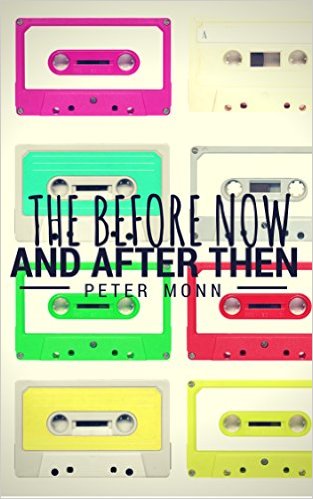
The Before Now And After Then - When his identical brother dies, a gay teen has to create a new world of his own (and has his first relationship)


The Before Now And After Then by Peter Monn

Danny Goldstein has always lived in the shadow of his identical twin brother, Sam. But when a hurricane of events forces him into the spotlight, he starts to realize that the only thing he'’s truly afraid of is himself. With the help of his costume changing friend Cher, a famous uncle with a mysterious past of his own, two aging punk rocker parents and Rusty, the boy who will become his something to live for, Danny begins to realize that the music of the heart is truly the soundtrack for living.”

Add your review of "The Before Now and After Then" in comments!

Wednesday, March 2, 2016

Digital Book World Pre-Conference Interview Roundup: Christopher Kenneally, Peter Hildeck-Smith, Jane Friedman, Kristen McLean and Lorraine Shanley

I'm heading to #DBW16, The 2016 Digital Book World Conference + Expo, in New York Monday March 7 through Wednesday March 9!


I'll be tweeting (with the hashtag, #DBW16), doing some blogging, and representing Little Pickle Press as their VP of Digital, Communications and Community Engagement. As #DBW16 puts it,
"Publishing’s digital transformation is happening all around us. And if you plan to survive it—and thrive—you must attend Digital Book World Conference + Expo."

The Monday of the conference has different tracks, and of course I'll be at Launch Kids, the Children's Books + Media conference, where they'll be focusing on the consumer and education markets. Tuesday and Wednesday will be the main conference, filled with speakers, panels, breakout sessions and exhibits. The #DBW16 faculty are a who's who, and here are my exclusive pre-conference interviews with Christopher Kenneally, Peter Hildeck-Smith,  Jane Friedman, Kristen McLean and Lorraine Shanley.

Christopher Kenneally

Christopher Kenneally is the Director of Business Development at the Copyright Clearance Center, and the host and producer of CCC's weekly podcast, "Beyond the Book."

Lee: Hi Christopher. Do you see the digital transformation of publishing as empowering some players over others?

Christopher: Once upon a time, freedom of the press was guaranteed to those who owned one. Digital publishing technology has upended that once-ironclad rule and given to anyone with a keyboard and an Internet connection the power to report news, express opinion and demonstrate creativity. The potential result is a Golden Age not only for the human spirit but also for reading. The dilemma is that we are all left to sort out the wheat from the chaff.

Lee: A lot is said about the "democratization" of publishing and discoverability, now that anyone can be published and everyone can be on social media. What do you see as the role of regulation in terms of keeping the playing field level?

Christopher: As a former journalist, I put myself down as a “First Amendment First” kind of guy. The tough part of “democratization” when it comes to publishing is that people can say whatever they want. Incitement aside, that means we have to suffer with bad stuff to enjoy the good.

Lee: What do you most look forward to about attending the 2016 Digital Book World Conference + Expo?

Christopher: I’ve attended each year since the show first opened in January 2010. The timing was incredible – the conference came to a halt and everyone watched on a big screen together as Steve Jobs introduced the iPad. That moment made clear that digital publishing and reading were here to stay. We may not see the same level of drama in 2016, but the remarkable pace of change in technology and the impact that technology has on this business makes Digital Book World a great place to catch up and keep up. With any lucky, maybe I will even get out ahead of the crowd!

Thanks, Christopher!


Peter Hildick-Smith
Peter Hildick-Smith founded Codex-Group in 2004, pioneering "book audience strategy research." He lectures on book publishing strategy at Wharton, Princeton and NYU.

Lee: You'll be speaking on a panel, "The Book Buyer's Journey: Understanding the Consumer Path to Purchase" that aims to focus on "what happens between initial awareness of a book's existence and the final decision to purchase it." What do you see as the major levers publishers (and authors) have to help, as the session description says, "convert discovery into a purchase?"

Peter: From Codex-Group’s new book sales forecasting models we’ve learned that initial new book sales are dependent on a publisher’s success in three areas – Discovery, Conversion and Availability -- all powerfully delivered to the right book buyer target audience. Failure to deliver on any one of these three factors dramatically reduces new book initial sales.

Discovery is simply the act of making someone aware a book exists – period. It’s a huge challenge all by itself, but often highly misunderstood. Because the impact of Discovery and Conversion on sales is highly interdependent, people often conflate the two, thinking that a strong discovery campaign will automatically yield strong conversion to purchase – not true. The solution to great discovery is totally independent of conversion, and vice versa. The three biggest challenges of discovery are 1) Targeted Discovery: knowing and reaching the right audience for the book, 2) Effective Discovery: making sure that target group has multiple discovery experiences for the book, because one exposure is not enough to drive response, 3) Scale: reaching enough audience members, enough times to meet the book’s unit sales and sales velocity goals within the extremely limited budgets a book P&L can support.

Conversion is the motivating force that takes a target consumer from awareness to action – from look to click, from click to browse, from browse to read, and hopefully to buy. The three most powerful conversion factors are, 1) Book Identity – what is it, what’s it about, what makes it interesting, and how that is all communicated through the book’s marketing message, 2) Author Brand Equity – the size and most importantly, loyalty of the author’s (or lead character, or series) fan base. Fiction is the most driven by Author Equity, followed by narrative nonfiction. Where author equity exists at a meaningful level, it is by far the greatest conversion to sales factor. Where it doesn’t exist, the goal for both author and publisher is to build and grow it because of its sustaining power for future book sales.

Lastly, Availability is simply ensuring that a new book is available whenever, wherever in whatever format a book consumer wants at the moment they convert to purchase interest. Major book publishers are masters of availability, but must always keep in mind that roughly 40% of books are bought the same day they are discovered, so promoting a book 3 months before even a pre-order button is available, let alone physical copies are in store, can be very risky, when as much as 70% of books are bought within 2 weeks of initial discovery. With the Kindle store alone adding about 1 million new titles in 2015, so at any one moment book shoppers have a mindboggling number of new books to consider reading and buying each day. With this level of clutter and distraction, a book has to quickly command attention and convert a book shopper to a book buyer without delay or distraction, or risk another new book displacing it on the shopping list.

Lee: You teach book publishing strategy at Wharton, Princeton and NYU. Do you see the digital transformation of publishing empowering some stakeholders and not others?

Peter: Clearly the digital transformation in publishing has opened up a whole new world of publishing, giving hundreds of thousands of writers the unprecedented chance to publish their work and reach new audiences, something truly revolutionary! 

On the other hand the digital transformation has also created a huge schism in book pricing and that has resulting in major issues in pricing expectation, where the average price of a book in the Kindle store is below $5, book consumers’ average expected price of an eBook in the Kindle store is just above $8 and the average price of a Big 5 eBook is north of $10, putting significant pressure particularly on the fiction categories, and even more so in Romance segments, where a very high % of self-published books are focused.

Lee: What do you most look forward to about attending the 2016 Digital Book World Conference + Expo?

Peter: Meeting or reconnecting with book industry thought leaders to catch up on their latest ideas and perspectives.

Thanks, Peter!

Jane Friedman

Jane Friedman is the publisher of Scratch magazine, teaches digital media at the University of Virginia, and is a professor with the Great Courses on publishing. With 20 years of experience in publishing, her focus is "content strategy for authors and publishers," and her blog for writers is essential reading.

Lee: Hi, Jane! You'll be chairing a panel, "Finding Common Ground: How Publishers and Authors -- Regardless of What Path They're Taking -- Are Working Together." As the panel description reads, "more and more authors are 'hybrids': delivering some of their books through publishers and self-publishing other works." Does this empower today's authors and illustrators in a way that's new?

Jane: Yes, because authors aren't limited to just one business model—the traditional publisher's model. And frankly, this is good for publishers, too. Not every project requires the kind of assistance or benefit provided by a traditional publisher. But, as the old cliche goes, with power comes responsibility. Rather than going to a publisher by default with every idea, an author or illustrator should first be asking themselves strategic questions: What is the purpose of this project? How does it further my career? Does it require a publisher's expertise or distribution to succeed on my terms? Furthermore, publishers who are working in a progressive way recognize that when their authors are successful, even when it's with books outside of their purview, everyone wins.

Lee: Is the democratization of being discovered via social media part of the digital changes that play into this new landscape?

Jane: Social media is a very small part of the picture. What's more important is that all types of digital media (including social media) allow authors a direct and immediate way of finding and engaging directly with their readership. New technology also allows authors, along with publishers, to better measure and analyze what types of marketing and promotion efforts work, and how to improve them quantifiably with each new campaign. Authors' marketing roles and resources are becoming ever more important because they're owners of the analytics that carry a lot of audience data: their website analytics, their Facebook and Twitter analytics, their email newsletter analytics. Therefore, collaboration between authors and publishers is essential, and any form of tunnel vision (we'll only work on what sells this book) makes less sense, and becomes less possible.

Lee: What do you most look forward to about attending the 2016 Digital Book World Conference + Expo and Launch Kids?

Jane: Since I'm based in Charlottesville, VA, it's good for me to get to New York at least once or twice a year, where I can touch base with colleagues and friends with whom I only interact virtually the rest of the year. You get a much better sense of what people's real concerns are, and where the energy of the industry is focused. I also enjoy translating what I see and hear into plain English for writers over at my blog and in my newsletter for authors, The Hot Sheet (http://hotsheetpub.com).

Thanks, Jane!

Kristen McLean


Kristen McLean is the Director of New Business Development at Nielsen Book, a part of Nielsen Entertainment. She is a twenty two year veteran of the book publishing market, a serial entrepreneur, and an industry thought leader, deeply interested in the confluence of consumer behavior, technology, literacy, and global transformation in the Digital Age.

Lee: In your morning keynote at Launch Kids, "What Do Your Highest Value Customers Look Like? Findings from the Nielsen Children's Book Segmentation Study" you'll be sharing "top level" insights on the parents, kids and families buying children's books.... and even how reading is interacting with other kinds of media in the lives of children. Do you see this information empowering not just publishers, but also authors and illustrators?

Kristen: Yes, I think as a content creator it's important to understand as much as you can about what's going on in the lives of families and children today, so that you can continue to create stories that speak directly to them. The ongoing Children's Book Consumer research we do at Nielsen is really focused on understanding exactly who is buying books and why, and then exploring how those books are related to kids' other activities, which is particularly relevant in the modern multi-platform world. The DBW presentation is going to focus specifically on the types of families that are buying the most books today--who they are, where they are, and what they look like--as well as the types of families where we believe there is room to grow new readers and book lovers.

In terms of why Authors, Illustrators, and other Content Creators should care, today's kids are incredibly savvy--they navigate technology seamlessly, have a very high level of sophistication about the world about them, and they are able to dive into anything they are interested in and follow it through books, on screens, and in the real world. It's tremendously empowering, and it's driving all kinds of very interesting trends like kid entrepreneurship, environmental activism, the kids' maker/inventor movement, and so much more. At the same time, they inhabit a noisy world with lots of messages, and they still need great stories to help them grow, interpret their feelings, and nurture their imaginations. I'm not suggesting that to be relevant, every story has to include a character with a mobile phone--rather, understanding the lives of kids today can spark new ideas, and help understand what is bubbling up, and allow authors, illustrators, and content professionals to tap into the things kids are interested in. Along the way, I think they will be surprised at how self-aware, positive, hopeful and engaged today's kids really are. In my experience, most of our adult fears about disaffected, tuned out kids should be completely re-written. I'm very hopeful about these children. I think it's very exciting.

Lee:  Change, in terms of children's books and technology, seems to be a new constant. What's your advice about thriving in the midst of all this change?

Kristen: Well, it's true we have seen tremendous shifts in technology, consumer behavior, and format in the last decade, however the one thing that has remained constant at the heart of the children's market is STORY. You can create the most fantastic multi-media platform in the world and if it doesn't have a good story to tell, it's going nowhere. So when I'm asked this question--and I often am--I say reinvest in the core values of good storytelling, and then tackle the rest after that.

The Children's Publishing market has another thing going for it--parents remain very invested in print books for their children, and even teens have a strong preference for print versus eBook. Right now, the overall eReading figures for Juvenile books are at 12% of total reading versus 88% print, and we expect eBooks to remain steady at that level, or perhaps even decline.

That is not to say that kids are engaging in less media--they are actually consuming more overall, but reading is holding its ground, and books are still valued very highly by parents and kids. When it comes to digital for kids, it's all about tablets--which have now topped the 80% penetration point in US households. These are basically curiosity libraries for kids' interests, and the most successful digital representations of kids' books and story-worlds are not eBooks, but other forms of media like games, TV shows, YouTube videos, apps, and even audio in new platforms like podcasts. The challenge for parents is going to be making sure kids get a balanced "play diet" with digital engagement in proportion to other kinds of things like imaginative play, building & construction, and getting outside.

So the formula for thriving as an author and illustrator in all this is -- STORY is always first, and keep an ear to the ground for interesting case studies, successful media projects and good insights about kids & families. Stay curious--about both your readers, and your art, and don't buy into negative fear mongering about today's kids. My favorite email newsletter to monitor developments in kids' media comes from KidScreen. http://kidscreen.com/subscribe/newsletter/

Lee: Great tip, thanks! What do you most look forward to about attending the 2016 Digital Book World Conference + Expo and Launch Kids?

Kristen: For me, it's always the opportunity to network, and to be able to sit and listen for new ideas and take the temperature of the industry by the conversations going on.

Thank you, Kristen!


Lorraine Shanley

Lorraine Shanley is chairing the Launch Kids Books + Media Monday Conference (for the 5th year in a row!), and is also President of Market Partners International, a consulting firm that specializes in traditional and digital publishing and executive search.

Lee: As one of publishing's "most prominent executive recruiters," you help publishers find the people who can help them navigate all this digital change. Often, the unknown is seen as scary--how do you advise "legacy" publishers to find the synergy between the old and the new?

Lorraine: Most 'legacy' publishers are by now ready, even eager, to bring new skills to their businesses, but obviously both new hires and employees have to be willing to work together. A lot of publishing people are excited about the expertise that these people bring, as well as the sales and marketing tools that show them how their books are sold, and even read. Whether they're taught how to use these tools and what their significance is, well that's another issue.

Lee: You're also an expert in research and "multi-channel marketing." What do you see as one (or two) of the biggest opportunities the digital landscape has given book creators (either independent-, or traditionally published) to have their works discovered, and bought, and loved?

Lorraine: Unquestionably, it's the ability to connect directly with the reader - as a marketer and as an author. I attended an NYU Publishing panel the other day with four authors - David Baldacci, Erik Larson, Jeff Kinney and Alice Hoffman, and each talked about his or her connection to their readers. Ironically, Kinney has less of a social media presence in some ways, but of course he built his Whimpy Kids audience online. Baldacci has an ongoing conversation with several fans about his plots, and Larson has even met with Twitter followers.

I think having the ability to self publish and market an author's own work has also benefitted all authors because it has presented a choice: go the traditional agented, published route or, if that doesn't appeal or isn't possible, take full control of the publishing process. In the past, there was only the frustration of trying to get published, but now there are real options. Your voice can be heard.

Lee: Besides your own presentation, what are you most looking forward to at the Digital Book World Conference + Expo?

Lorraine: Obviously Launch Kids is my focus, and there are many highlights there, including a brand new Nielsen survey of the children’s market, a conversation between bestselling author Jenny Han and Tumbler’s Rachel Fershleiser, and some great panels on brands, startups, and how schools and libraries can work together. But I always attend DBW sessions. This year there are several presentations from companies like Rodale, Ingram, Wiley and NetGalley about how they’re transforming themselves, which sounds intriguing.*

Thanks, Lorraine!

It's going to be a remarkable conference. If you'll be there, say hello! And if you still want to register, #DBW16 is offering a discount on registration: Use the code SCBWI5 to get 5 percent off.

And if you'd like to follow along on social media, use the hashtag #DBW16.

Lee


*This answer was originally from this interview with Lorraine and was used with her permission.

You can also check out my SCBWI: The Blog post about the Author Earnings website and Launch Kids here, and my two additional pre-#DBW16 interviews with Stephen Blake Mettee and Kevin Franco here.

Monday, February 29, 2016

Carry On - An Incredibly Fun (And New York Times Bestselling!) Gay Teen Wizard Fantasy


Carry On by Rainbow Rowell

Simon Snow is the worst Chosen One who's ever been chosen.

That's what his roommate, Baz, says. And Baz might be evil and a vampire and a "complete git," but he's probably right.

Half the time, Simon can't even make his wand work, and the other half, he starts something on fire. His mentor's avoiding him, his girlfriend broke up with him, and there's a magic-eating monster running around, wearing Simon's face. Baz would be having a field day with all this, if he were here--it's their last year at the Watford School of Magicks, and Simon's infuriating nemesis didn't even bother to show up.

I flippin' LOVED this book. And I'm not alone (that best-seller thing.) If you liked Harry Potter, if you wanted to see more GAY content and characters in Harry Potter, if you wished Dumbledore had been out about being gay inside the seven Harry Potter books... Read "Carry On."

You're welcome.

Friday, February 26, 2016

Freak Camp: Posts From a Previously Normal Girl - A 13 year-old girl comes of age (with a LGBT main character, and an LGBT parent and step-parent)


Freak Camp: Posts From A Previously Normal Girl by Jessica V. Barnett

Thirteen-year-old Celeste Jardine has one priority for the summer: to identify her source — earth, air, water, or fire. Only then can she register for one of the four public source schools and avoid being sent to Fluidity, the local private school for unidentified teens. Things explode the last day of school when Celeste learns that her perfect best friend, May, is going away to earth camp for eight weeks. To add insult to injury, Celeste's mom has decided to send her to summer camp at the very place she has been trying so hard to avoid ... Fluidity. Celeste resolves to try anything under the sun—or on the Internet—to get into source school in the fall. But, after rekindling a friendship with her estranged neighbor, Rainie, Celeste must confront startling new truths about who she is, who she loves, and where she wants to be when fall classes start.

The author self-published this novel. Add your review of "Freak Camp" in comments!

Wednesday, February 24, 2016

#MoreThanMarriage - a great video by a College Sophomore

Check out this video that Kinsey did in collaboration with Family Equality Council:


And there's an excellent interview with Kinsey about the video (and her moms who helped win marriage equality for all) here.

My thanks to Kinsey and the Family Equality Council!
Lee

Monday, February 22, 2016

"It's Perfectly Normal: Changing Bodies, Growing Up, Sex and Sexual Health" For Ages 10 and Up - an excellent resource for ages 10 and up


"It's Perfectly Normal: Changing Bodies, Growing Up, Sex and Sexual Health" by Robie H. Harris and Michael Emberley


I checked out this "New Edition: 20th Anniversary" from the library because the book was among the top 10 most challenged books in 2014 in the USA, as cited by the American Library Association's Banned Books Week.

While I wish there was more acknowledgement of gender variety (the presentation of gender is very binary, "Gender is another word for whether a person is male or female.") I applaud the clear, non-judgmental approach, especially in the "Who You Are: Straight, Lesbian, Gay, Bisexual, Transgender" chapter on pages 8-11.

Chapters (about four or so pages each) cover a wide range of topics, including sexual desire, sexual intercourse, puberty, masturbation, genes and chromosomes, the many ways to have a baby and family, birth control, abortion, cyber safety, sexual abuse, sexually transmitted diseases and making responsible choices.

Throughout are illustrations of three kinds. The first are a cartoon bird and bee character who banter and comment on the content, the bird more interested, the bee more reluctant to talk about sex. It's a touch of humor that is reassuringly there across some difficult topics. The second kind of illustration is frank and very diverse watercolor and pencil drawings of people: young, old, gay, straight, asian, black, white, latino/a, abled, disabled, thin, fat, tall, short, naked and clothed... The third are cartoon pages that reinforce and re-state the text's explanation of topics like puberty for boys and girls and "The Further Adventures of the Egg and Sperm: Pregnancy."

As author Robie H. Harris (a parent herself) explained, she wrote the book because she realized,

"How difficult but necessary it is to talk with children and teenagers about sex and answer questions about this complicated topic. I wanted my kids to stay healthy, so I had to give them accurate information."

I think that is absolutely true. And as a parent of a pre-teen myself, I just ordered a copy from our local indie bookstore to give them, so we can read and discuss together.

Add your review of "It's Perfectly Normal: Changing Bodies, Growing Up, Sex and Sexual Health" in comments!


Friday, February 19, 2016

Every Inferno - a teen mystery with a gay and a questioning character


Every Inferno by Johanna Parkhurst
Depressed. Defiant. Possible alcoholic. These are just a few of the terms used to describe fifteen-year-old Jacob Jasper Jones. Lately, though, JJ has a new one to add to the list: detective. He’s been having strange dreams about the fire that killed his parents ten years ago, and he thinks he finally has the clue to catching the arsonist who destroyed his family.

A murder investigation isn’t the only thing the dreams trigger for JJ, though. They also lead to secret meetings with his estranged sister, an unlikely connection with a doctor who lost his daughter in the fire, and a confusing friendship with McKinley, a classmate of JJ’s who seems determined to help him solve the mystery.

All JJ wants is to shake the problems that have followed him since that fire, and he’s convinced he must catch the arsonist to do it. But as JJ struggles to find the culprit, he sees there’s more than one mystery in his life he needs to solve.

Add your review of "Every Inferno" in comments!

Wednesday, February 17, 2016

The next time someone asks about why we need Black History Month...

Share this bit of wisdom, from a teenager:


Brilliant. True. And painfully honest. I can't improve on that answer, so I'm cheering her on, and sharing it here.


Monday, February 15, 2016

My Dozen Highlights of #NY16SCBWI

What a conference!


Here are some of my conference highlights. I'd love to hear yours. Share your highlights in comments!

Thanks,
Lee


1.
Rainbow Rowell talking about writing a character, and saying, "as an author, you need to find your way in." (She spoke about Agatha in Carry On, and how her key was the idea that for Agatha, magic was religion. She's born into it. But she gets to choose.) And yeah, I got to meet Rainbow Rowell. I admit, I kind of had a FanBoy moment, there...

@KimBriggs_Write captured the moment and tweeted it, with the very accurate tweet: @leewind fanboying with @rainbowrowell **heartsquee** #NY16SCBWI

Me and... Rainbow Rowell!


2.
Linda Urban saying, "I believe that, if we write well, we can create and stretch empathy muscles for readers."

3.
Liz Bucknell, Executive Vice President, Executive Editorial Director & Associate Publisher at Candlewick Press, speaking of the 2015 re-issue of "Heather Has Two Mommies," and how it's not had a single challenge. (When it came out the first time round, it was #9 on the ALA's most challenged books list.) After she told us of the no challenge thing, Liz said, "which is good... though for sales, challenges can be handy."

4.
Gary Schmidt saying, "You write the book for you... you work with an editor to make it even more you."

5.
and another Gary Schmidt moment, "We write, we write, we write to share a world that is broken and lovely... we write to serve."

6.
Jane Yolen saying, "You are my tribe."

7.
The LGBTQ and Allies Q&A - Thank you to Jane Yolen, Laurent Linn, Mike Curato and Michael Joosten for representing as our special guests and to all the attendees for being part of our diversity-focused tribe-within-a-tribe circle!

8.
Michelle Parker Rock saying "Being different crosses lots of barriers... let your voices ring out!"

9.
"There are no rules you can never break." - Liz Bicknell

10.
"A lot of success is what your expectations are." -Mallory Loehr

11. Spending time with my community and friends - all of us passionate about writing and illustrating and editing and art directing and blogging and reviewing and publishing books and content for children and teens.

12.
I'm so grateful for the continuing opportunity to blog for SCBWI, and to lead the remarkable SCBWI Team Blog. Shouting out to Martha Brockenbrough, Jolie Stekly, Jaime Temairik, and Don Tate. Thank you!

And thanks to you, my online community, for letting me share.

Friday, February 12, 2016

It's #NY16SCBWI, The SCBWI Winter Conference!


One of my favorite times of the year!

I'm especially looking forward to hosting the Saturday February 13th LGBTQ Q&A, with special conference faculty guests, from 8:30pm - 9:30pm in Uris/Juilliard on the Conference Level.

Much more blogging at the Official SCBWI Conference blog here, and follow along on twitter with the hashtag #NY16SCBWI

Here's to a great conference for all!
Lee

Wednesday, February 10, 2016

Intervention - A High School Senior Sets His Sights On The Hot College Guy Who Works At The Same Cafe, And Discovers "...a whole new understanding of what sex can be when love is there too."


Intervention by Mia Kerick

As a musician at the popular college café Coed Joe’s, high school senior Kai Manter is never lacking for male attention. Out, proud, free-spirited, and sexually aware, Kai sets his sights on his darkly Gothic and undeniably bad-tempered coworker, Jamie Arlotta, a freshman at the local arts university. Sporting long hair and alluring hippie style, Kai expects his interest will be reciprocated, with satisfying sex as the end goal. That’s what usually happens. But Jamie’s lessons in life have been harsher. Having been sexually abused by his older stepbrother for several years, Jamie has grown an impenetrable outer shell meant to keep the world at a safe distance.

Kai is angry at first when he takes the brunt of Jamie’s bad temper, but after Kai accidentally discovers the abuse Jamie has suffered, he wants to fix things. Kai’s plan is based on what he knows best—music—and he stages a “musical intervention” to let Jamie know he’s not alone and things can get better. When Jamie’s perspective changes and he emerges from his shell, Kai changes, too, gaining a whole new understanding of what sex can be when love is there too.

Add your review of "Intervention" in comments!

Monday, February 8, 2016

It's OFFICIAL! I've sold my first book!

Ohmygoshohmygoshohmygosh!

I am so excited to finally get to share this news. Here it is, in the February 8, 2016 issue of Publisher's Weekly:

This issue


Inside, on page 9, is something crazy-wonderful:

This page


Here's a close-up:

This announcement!

Here's what it says. And yeah, I'm fighting back tears as I type this. Happy tears.

Wind Takes 'Queer History" to Aladdin
Lindsay Brown at Aladdin's Beyond Words imprint nabbed world English rights to Lee Wind's nonfiction middle grade book, The Queer History Project: No Way, They Were Gay? Wind is a writer and LGBTQ activist—he's behind the popular blog "I'm Here. I'm Queer. What the Hell Do I Read?"—and was represented in the deal by Danielle Smith at Red Fox Literary. Smith said the book will "explore surprising LGBTQ loves and lives across time and around our world." The Queer History Project is set for a September 2017 publication.

Beyond Words is a super-cool imprint of Simon & Schuster, and I'm so so so so so so so excited!

My 11-year journey so far in children's literature has been a roller coaster of hope and rejection and working on my craft and encouragement and then rejection and hope again... I know the ride will continue to twist and turn and even loop-de-loop, but knowing I've sold a book (!) means I will probably have this silly grin on my face for the rest of the ride!

Most of all, this book of LGBTQ profiles and primary sources matches my mission that I printed out and hung on the wall above my desk some seven years ago:

"My mission is to write the books that had I read them as a kid would have changed my life."

Had I known just one of these true stories of men who loved men, women who loved women, or people who lived their lives outside gender boundaries...

Had I known that Lincoln, Abraham Lincoln, was in love with another guy, Joshua Fry Speed, and gotten to read some of Lincoln's letters to Joshua.

That Shakespeare, William Shakesepeare, wrote over 120 Sonnets—love poems—to a young man, and gotten to read some of them.

That Gandhi, Mahatma Gandhi, was in love with a German-Jewish architect, Hermann Kallenbach, and gotten to read the contract between them pledging "more love and yet more love... such love as, they hope, the world has not seen."

I didn't come out as a gay man until I was in my mid-twenties. A book like this, like my The Queer History Project: No Way, They Were Gay?, would have changed EVERYTHING for me. So since I don't have a time machine, I'm writing it for young people today.

I'm writing it for every LGBTQ young person out there so that they can be authentic now.

I'm writing it for every hetero and cis-gendered young person out there so they know that our history—the world's history—is full of amazing men who loved men, incredible women who loved women (like Eleanor Roosevelt and Frida Kahlo), and remarkable people who lived their lives outside gender boundaries (like the Pharoah Hatshepsut and Christine Jorgensen.)

I'm writing it for every LGBTQ adult who, like me, never learned any of this in school,

and for every hetero and cis-gendered adult willing to consider that it's just not that likely that everyone famous and important in history was hetero and cis-gendered, too.

I'm writing my book to change the world.

And it's going to be published by Beyond Words/Aladdin/Simon & Schuster!

There's a huge circle of people to thank, and most of those appreciations will come later. For now, three THANK YOUs that can't wait:

Thank you, Danielle!

Danielle Smith of Red Fox Literary is my literary agent, champion, and friend. I'm so grateful to have you with me on this journey!

The news is sparkling, and so is the photo!


Thank you to my awesome kid! No one has been more excited (or encouraging) about this. I'm so blessed to be your Papi.

The smiley face inside the "d" makes my congratulations note even sweeter!


And thank you to my words-can't-really-express-it-but-I-keep-trying-wonderful husband. Your love gives me wings!
Best. Guy. Ever!


And one more appreciation that can't wait -- to you, reading this. Thank you for being part of my fantastic community, and for letting me shout my news from the rooftops:

I'VE GOT A BOOK COMING OUT IN SEPTEMBER 2017! 
Whoooooooo-Hoooooooo!


One more 'Thanks!' to my Dad for the celebratory bottle of Champagne!


Friday, February 5, 2016

Vivaldi In The Dark - Jayden Falls In Love With Darren, A Troubled Violinist


Vivaldi In The Dark by Matthew J. Metzger

Sixteen-year-old Jayden falls in love with Darren Peace, a troubled violinist who is both everything Jayden wants, and everything he doesn’t: his brilliance is tempered by severe depression that gets worse the more he is forced to play. Jayden is torn between knowing he can’t help, and desperately wanting to regardless – until a mugging that goes wrong gives him the chance to change everything.

Add your review of "Vivaldi In The Dark" in comments!